


Your client sits at your station and asks about a structured manicure - a treatment that creates strong, lasting nails without the bulk of traditional acrylics. You may already know the answer, as structured manicures have become a popular nail trend - from New York salons to small-town shops, clients are asking for structured manicures. But explaining structured manicures to a curious client can still be tricky.
With this guide, you'll learn the difference between structured and sculpted nails, as well as learn about the products and tools used for the service. You'll also learn how a structured gel manicure is applied step by step.
What Are Structured Nails?
A structured gel manicure uses a builder gel or hard gel that, when applied to the nail, retains its structure before being cured. Unlike standard gel polish, structured gel is thicker and adds height to the nail. The added structure makes the manicure more resistant to chipping and peeling.
Nail technicians will often recommend a structured gel overlay when a client has brittle nails or short nails that they'd like to grow out over the course of several weeks. The structured gel will provide some reinforcement to the natural nail while hiding the nail bed as it grows out.
How Do Structured Nails Differ From Gel Polish?
While the manicure uses gel products, a structured gel manicure differs from regular gel polish because the latter is primarily cosmetic and provides little reinforcement to the nail plate.
How Do Structured Nails Differ From Acrylic Nails?
Unlike acrylic nails, which use a liquid-and-powder system, structured gel nails cure under a lamp and generally have less bulk than acrylics.
Common Materials for Structured Nails
- Builder Gel is a thick, self-leveling product that is ideal for creating overlays and light extensions on natural nails.
- Hard Gel is a medium-consistency product, perfect for reinforcement and light extensions on natural nails.
- Jelly Gel is an extra-thick, pudding-like consistency that won't run or spread as you apply it.
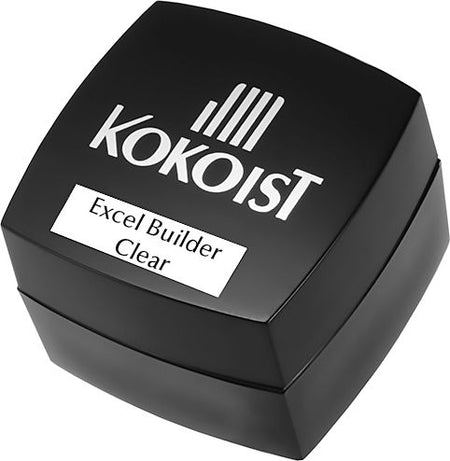
For a true builder gel product, try Kokoist Excel Builder E-B Clear structured Gel Polish. This product comes in a small size for testing purposes and a larger size for full use in the salon. As a clear product, it can build out natural nails or add extra reinforcement to a standard gel manicure. Technicians often choose it for its versatility and reliability.
What Are Sculptured Nails?
One reason a sculptured manicure might look more natural than a structured manicure is this seamless extension.
Products for Sculpting Nails
You can use acrylics for sculpting, as long as the product is thick enough to hold its shape once cured.
Tools for Sculpting Nails
- Paper Forms: Place these under the free edge of the nail and fill them.
- Dual Forms: These are moldable plastic forms that are the approximate shape and size of the nail. They are pressed to the nail.
F.O.X Jelly Gel is ideal for sculpting since it adheres to the contours of the form and does not drip or run. This product works for both paper-form and dual-form sculpting methods. This product is popular among technicians who will be adding nail art to their sculptured manicures, as the application of an alternative gel manicure can cause the image to run. This product comes in a variety of colors so that the client can choose the desired color for their sculptured extension.

Structured Nails vs Sculptured Nails: The Main Differences
Both manicures generally use a similar set of products. However, the differences between the two are the reason why clients are choosing one over the other.
| Structured Nails | Sculptured Nails | |
|---|---|---|
| What it describes | The product (thick, self-supporting gel) | The method (built on a form, not a tip) |
| Where it's applied | Natural nail, with or without a tip or form | Natural nail plus a nail form |
| Adds length? | Not necessarily; structure can go on a short nail | Usually, that's the point |
| Can they overlap? | Yes, most sculptured sets are also structured | Yes, but not every structured set is sculptured |
How to Apply Structured Nails Step by Step
A long-lasting manicure starts with proper preparation. The following steps will guide you through the F.O.X Nails process for applying hard gel products.
Step 1: Prep the Natural Nail
- Remove oils and moisture from the nail plate and gently push back the cuticles using a nail prep solution.
- Use an acid-free primer such as F.O.X Ultrabond to ensure strong adhesion without irritating the cuticle area.
Step 2: Apply the Base
- Select an elastic base, such as F.O.X Power Base or a rubber base, so the manicure flexes with the nail rather than peeling at the cuticle.
- Cure for approximately 60 seconds under a 36W UV lamp or 30 seconds under a 36/48W LED lamp before applying any structure or color to the nails.
Step 3: Build the Structure
- Apply thin layers of product to the nail rather than a thick layer to ensure an even cure.
- Cure between each layer to ensure that the manicure doesn't budge before fully curing. This reduces the likelihood of premature peeling.
Step 4: Finish the Structure
- File the natural apex and edges to shape the manicure.
- Apply a top coat to the manicure for a glossy finish and added reinforcement.
- Because F.O.X Hard Gel is self-leveling and doesn't require filing before curing, it saves time and effort compared to similar products that require this step.
How to Sculpt Nails: A Step-by-Step Guide
The process for sculpting a manicure consists of two primary steps: selecting the form and building the product.
1. Select the Form
Ensure the selected form fits the nail plate in length and width. A form that is too tight will make the extension look uneven along the sides of the nail.
Select between paper forms (single-use) and dual forms (reusable after disinfecting between clients).
2. Build the Extension
- Apply the product to the form to ensure even distribution as it cures. This will reduce the likelihood of the manicure cracking at the point of application due to insufficient product.
- Remove the form after the product has cured to prevent distortion. Failure to do so will distort the manicure.
- File the manicure to the desired shape using either a hand file or an e-file. The manicure will cure to a hardened surface, so only light filing is required.
For sculpting applications, F.O.X recommends Builder Gel in a Pot. This product is slightly thinner than a standard builder gel, allowing it to self-level more slowly once applied to the nail. This gives the technician greater control of the product, which is required when applying it to a form. This thick consistency is particularly useful when building very long extensions or when the client desires a dramatic change in length.
The Benefits of Structured and Sculptured Nails
Add Strength to Brittle Nails
Both manicures apply a stronger product to the nail, adding reinforcement that helps prevent breakage.
Lasting Beauty
A properly applied structured manicure typically lasts longer than a standard soft gel manicure between fills, as the former is more resistant to chipping.
Custom Length and Shape
A sculptured set can be shaped to the client's personal preference rather than using a premade extension.
Healthier Natural Nails
Many clients who bite their nails or have brittle nails find their natural nails healthier after several fills of a structured manicure. Stronger natural nails mean fewer visits for emergency repairs.

How to Choose the Right Gel for the Job
While you can provide the same service to multiple clients, you may want to offer a slightly different manicure depending on the client's request. The following table compares the various gel products and their intended applications.
| Bottled builder gel | Overlays and light extensions | Thinner and more flexible than hard gel | Soaking off is an option |
| Hard gel | Strength with little added length | Thicker, the stronger base of the two | Files off, won't soak off |
| Jelly gel | Sculpting and detailed nail art | Extra thick, holds its position | Follow the product's own directions |
If you're stocking your table or your whole salon, it helps to keep all three on hand. The F.O.X Builder Gel, F.O.X Hard Gel, and F.O.X Jelly Gel collections
Frequently Asked Questions
How Long Does a Structured Gel Manicure Last?
A properly applied structured gel manicure typically lasts three to four weeks before requiring a fill. However, this depends on the rate at which the client's natural nails grow and how much regrowth is visible near the cuticle.
Are Structured Nails Bad for Your Natural Nails?
Most issues that arise in relation to structured nails are the result of improper filing when removing the product rather than the manicure itself.
Can You Get a Structured Gel Manicure Removed at Home?
You can't soak off hard gel, and builder gel manicures are not like a soft gel manicure. They require filing with a hand file or e-file. If you don't have the skill or equipment to safely file near the natural nail, a professional manicure to remove the product is recommended.
Do Sculptured Nails Require Special Tools?
Sculpting a manicure requires a few basic tools: a form (paper or dual), a UV or LED lamp for curing, a fine brush, and a file. If you're using acrylics to sculpt rather than gel products, you don't need a lamp. You don't need any tools beyond what is typically found in a salon.
Is Sculpting Harder to Learn Than Using a Premade Extension?
At first, yes. Once you've gained some experience, many technicians report that sculpting a manicure requires less overall effort than applying a premade extension.
Can Beginners Try a Structured Gel Manicure At Home?
Yes. A structured gel manicure on top of natural nails, using either a hard gel or a jelly gel, is a good option for beginners before attempting a sculptured set.
Can You Repair a Damaged Structured Nail Without Redoing the Whole Set?
In many cases, yes. A thick product, such as jelly gel, can repair a small chip or crack. This type of repair is recommended rather than removing the entire manicure in the event of a small issue.
Conclusion
A structured gel manicure is not the same as a sculptured gel manicure, despite their tendency to be mentioned in the same breath. Together, they create a durable, long-lasting, natural-looking set of nails. A bitten-down overlay or a sculptured extension, when applied using the correct products and followed by the right care, will hold up to daily wear and tear.
Explore F.O.X Nails USA's dust collector collection to find the best way to keep your space clean while working on structured nails, or other types of manicures.
For more information on types of nail products, check out our blogs like - what is jelly gel for nails, or nail dehydrator vs. primer.


