


You probably have clients who come in with dry, peeling, or overgrown skin around their nails, which leaves you struggling to deliver that cute Pinterest-coded manicure look in a short time. While it's tempting to cut this skin off as many nail techs do, the cuticle is actually there to protect the nail, and treating it the wrong way can cause redness or an open wound that risks infection.
Good cuticle care starts with telling the difference between dead tissue on the nail plate and living skin around it. When done correctly, it keeps a manicure looking professional, prevents product lifting, and prolongs wear time.
This guide covers how to identify and safely remove cuticle tissue. You’ll also learn how to pick the best tools for your current skill level and send your clients home with aftercare habits that make your job much easier at their next appointment.
What Are Cuticles and What Do They Do?
In salon talk, people use "cuticle" to describe all the skin at the base of the nail, which is why many nail techs aren't properly educated when it comes to prepping the area.
The cuticle is the thin, whitish or nearly transparent keratinized tissue that sticks to the nail plate, growing out from under the base of the nail. It's completely dead tissue, whereas the eponychium is the living skin directly behind it.
The primary function of the cuticle is to form a protective seal around the new nail as it grows out. This seal keeps bacteria and germs from entering the nail bed.
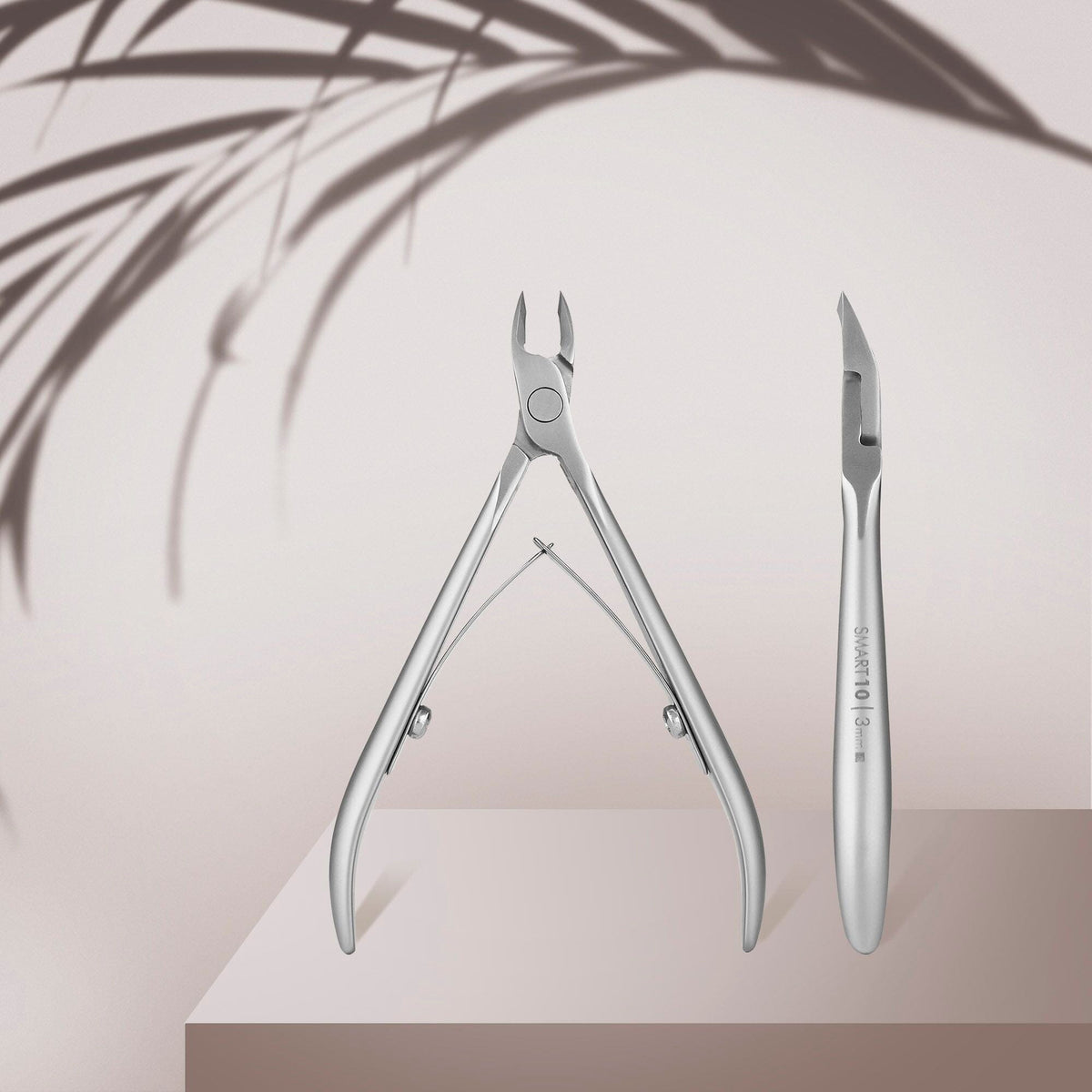
Staleks Cuticle Nippers
Straight cutting edges with an inclination
Shop NowIs It Safe to Cut the Cuticles?
According to the American Academy of Dermatology, cutting the cuticles makes it easy for "bacteria and other germs to get inside your body and cause an infection". But not touching the cuticle at all can cause polish or gel application to lift and look unprofessional.
So, should you cut the cuticles or not? The dead tissue can be removed, but the living skin around it should be left intact. If you clip past the dead tissue or aggressively force the skin back, you're much more likely to end up with irritation or bleeding. In the worst-case, your client can end up with a nail infection.
Common Signs of Cuticle Damage
Roughness, peeling, or cracking skin around the nail, tears on the sidewall, and mild redness are typical signs of overly aggressive manicure work that damages the cuticle.
Severe dryness, swelling, increasing pain, or fluid collecting around the nail may indicate an infection and should be evaluated by a dermatologist first.
The Daily Hydration Routine That Prevents Most Cuticle Problems
Cuticle care shouldn't end at your manicure table, especially for clients who return every few weeks with the same dry, rough nails or new hangnails. Between appointments, clients engage in activities that strip the nails of their natural moisture, such as frequent handwashing, washing dishes, and using household cleaning chemicals. Cool, dry weather and using acetone polish remover also have a similar effect.
A daily aftercare routine keeps the hands and cuticles soft and healthy between appointments. It's one of the simplest ways to keep the cuticle area flexible and less prone to cracking or hangnails.
Here's a simple routine you can recommend to your clients:
- Massage cuticle oil around the base and sides of each nail every day.
- Apply hand lotion after handwashing or prolonged exposure to water, when the skin is more likely to dry out again.
- Wear gloves while washing dishes, cleaning, gardening, or handling harsh chemicals.
- Don't bite, pick, or pull hangnails, since a small tear can quickly become a sore area.

What to Look for in a Cuticle Product
A good moisturizing cuticle oil usually contains nourishing, lightweight plant oils such as jojoba, sunflower, and sweet almond, along with vitamin E. If your client has severe dryness beyond the immediate cuticle area, a thick cream or ointment is advisable. A good one should contain deeply hydrating ingredients like hyaluronic acid, urea, shea butter, or squalene.
Regardless of the product, follow this guideline for frequency of use:
- For maintenance, apply daily, ideally at bedtime.
- For super-dry, rough, or neglected cuticles, apply 2 to 4 times a day, especially after washing.
How to Properly Take Care of Cuticles: The Step-by-Step Method
Proper cuticle care yields a clean, healthy-looking nail plate without redness, rawness, or soreness. This is how you'll know you've followed the method correctly.
- Soften the Area First: Soak your client's fingers in warm, soapy water for 10 minutes to soften their cuticles. If soaking isn't suitable, use a liquid cuticle remover or softener instead.
- Push gently: Use a sanitized cuticle pusher or a disposable wooden orange stick at a controlled angle, working the softened tissue towards the base of the nail. Use light strokes in one direction only.
- Trim Carefully: Don't push or trim any tissue that isn't dead or loose. Dead cuticle can be cleared away, and loose hangnails or detached skin can be trimmed out. When trimming hangnails, hold the nipper close to the base and ensure it's sharp to avoid tearing healthy skin.
- Finish With Hydration: Once the area is clean and dry, apply cuticle oil or moisturizer around the nail folds. For polish or gel services, leave the oil until the end so it doesn't interfere with application.
Tools for Each Step
You'll need a cuticle pusher or curette to push and clean softened cuticle, nippers to trim loose skin precisely, and scissors for finer detail work and small hangnails.
The Staleks Manicure Pusher EXPERT 51 TYPE 2 features a slanted end for lifting and pushing cuticles back, and a loop end for clearing remaining tissue.
When trimming is necessary, the Staleks Professional Cuticle Nippers SMART 30 (5 mm) provides a compact cutting edge for precise movements. The Staleks Professional Cuticle Scissors SMART 40 TYPE 3 have thin, narrow blades for trimming hard-to-reach areas.

Choosing the Right Cuticle Tools for a Salon Setting
Staleks tools come in four tiers, with sharpening and intended user changing as you move up the range:
- Classic: Made for home use and manually sharpened.
- Smart: Designed for entry-level professionals and salon use, with manual sharpening and fine polishing.
- Expert: Suitable for experienced professionals, with sharpening and polishing performed under a microscope.
- Exclusive: Also designed for high-level professional use, with microscope sharpening and more distinctive designs.
If you're new to professional cuticle work, Smart is the better place to start. Expert and Exclusive tools are extremely sharp, and we do not recommend those tiers for entry-level techs. You can move into professional tiers once you've mastered your techniques and feel confident.
With nippers, blade length is another practical factor to consider. Our Staleks nippers range from 3 mm to 18 mm, so you don't need to default to one blade size. For short, controlled cuts, start at the shorter end. If you are comfortable working with a longer cutting edge, the larger sizes give you more coverage per cut.
Pushers, Curettes, Nippers, and Scissors: What Each One Is Built For:
- Pushers push cuticle back from the nail plate, while curettes lift and remove tissue around the cuticle line and sidewalls.
- Nippers are best for short, precise cuts through loose skin. Jaw and blade length affect how much tissue you can trim with each cut.
- Cuticle scissors are useful for hangnails and small pieces of loose skin, especially where you want a continuous cut. Asymmetric and hook-blade designs can make sidewalls and tighter angles easier to reach.
Our Staleks nippers and cuticle scissors are made from medical-grade stainless steel 420 for durability and rust resistance.

Sterilization and Daily Tool Care
Reusable tools require proper cleaning and disinfection after every client use. Remove dust, dead skin, and product residue with a clean brush or soap and water. Then, sterilize or disinfect according to local licensing requirements and the tool manufacturer's instructions.
Most Staleks tools are suitable for autoclave and dry-heat sterilization.
After sterilizing, dry tools completely with a clean cloth to prevent rust, then store them in a case.
Signs a Tool Needs Replacing or Re-Sharpening
Check your tools regularly for:
- Dull blade edges that pull, snag, or tear the skin when you're trying to make a clean cut
- Rust, corrosion, or pitting
- Loose, stiff, or uneven hinges on pushers, scissors, or nippers
- Bent or damaged tips
When to Refer a Client to a Dermatologist
A client with persistent redness, swelling, increasing pain, pus, or skin that feels warm to the touch may have a nail-fold infection. Refer them to a dermatologist first, rather than giving them a manicure.
There are other situations where you should also recommend seeing a qualified healthcare professional over offering your services, such as:
- An open cut on their finger or toenails
- An unusually thick, discolored nail that is lifting from the nail bed
- Cracking, redness, or changes to the nail that do not improve after two to three weeks of regular moisturizing
FAQs
Should Cuticles Be Cut or Pushed Back?
Gently push cuticles back after softening them and remove any loose tissue. Be gentle when you do this, and avoid cutting into living skin when trimming hangnails.
How Often Should a Client Have Professional Cuticle Care?
There's no right frequency for when you should care for your cuticles, as growth rate, nail health, dryness, and manicure frequency vary from person to person. Check the condition of your client's cuticle at each appointment and remove only what's necessary.
What's the Difference Between a Cuticle Pusher and a Curette?
Cuticle pushers have a wide, flat edge, making them suited for pushing back the nail fold and loosening softened cuticle tissue. Curettes have smaller, rounded tips, ideal for lifting and removing dead skin from tight areas.
Which Staleks Tier Is Right for a New Technician Versus an Experienced One?
Smart is designed for entry-level professionals and nail salon work. Expert and Exclusive tiers are sharper, but not recommended for beginners.
How Should Cuticle Tools Be Sterilized Between Clients?
To sterilize cuticle tools between clients, wash and scrub them with gloves on, then follow local salon requirements and manufacturer instructions for disinfection or sterilization.
What Blade Length Works Best for Most Cuticle Trimming?
The best blade length for cutting cuticles depends on skill level, preference, and client hand size. Shorter blades (3 to 4 mm) offer precise control in small areas, while 7 mm and longer blades cover more tissue with each cut. A 5 mm nipper is a middle ground and offers plenty of control for manicure work, but the right size ultimately depends on your technique and comfort.
What's the Best Way to Hydrate Cuticles Between Salon Visits?
To hydrate cuticles between salon visits, use cuticle oil, hand cream, or ointment daily, reapplying after frequent handwashing. For very dry cuticles, try nail slugging at night: massage in cuticle oil, then layer petroleum jelly over it.
How Can Nail Techs Avoid Nicking a Client's Skin With Nippers?
To avoid nicking a client's skin with nippers, work only on softened cuticle, use sharp nippers, and keep the blades in your line of sight while cutting. Work in small, controlled nips, especially around corners and side walls.
What Are the Signs of an Infected Cuticle versus ordinary dryness?
Painful redness, swelling, unusual warmth, and pus collecting around the nail fold are signs of an infected cuticle. Stop working on the affected area and advise the client to see a dermatologist.
How Often Should Salon Cuticle Tools Be Replaced or Re-Sharpened?
Replace or re-sharpen your tool when you notice dull cutting edges, snagging, rust, damaged tips, or loose joints.
Conclusion
Safe cuticle care depends on proper prep, controlled pressure, and knowing what tissue to leave alone. Soften the area, remove only dead or loose tissue, and keep the surrounding skin hydrated. Clean, sharp tools help you do that without overworking the area, while leaving the living tissue intact protects healthy nail growth.
If you're ready to build or restock your nail station, check out our collection of pushers, nippers, and scissors to find the right tool for every client.
References
American Academy of Dermatology Association. (n.d.). Artificial nails: Dermatologists’ tips for reducing nail damage.


