


If you're a nail student or beginner tech and the thought of working on your first client makes you anxious, it could be that you still feel underprepared. You know you need plenty of practice to master the basic techniques and build your confidence, but the problem is that you struggle to find or pay people to practice on, and you can only paint your non-dominant nails so many times.
A nail practice hand solves this problem by giving you a pressure-free space to hone your craft and even create your own working style. This guide covers what nail practice hands are, the main types available, and how to pick the right fit for your training needs and budget. You’ll also learn how to use and care for one.
What Is a Nail Practice Hand?
A nail practice hand serves as a reusable, life-sized model of a human hand for manicure and nail enhancement training. Different models use materials like soft silicone, rubber, PVC, or hard plastic.
A practice hand provides a consistent surface for nail students and new technicians to perfect their techniques before taking on paying customers. This means that you can rehearse gel application, acrylic bead control, filing, shaping, and nail art at your own pace until the movements become second nature.
Most versions use removable nail tips that mimic a natural nail plate, while others feature built-in, non-removable nail beds that require you to glue standard false nails on them. Premium silicone versions typically include deep cuticle pockets that hold false nails firmly inside the finger, allowing you to easily slide out and replace the tip when you are ready for a new set.
Whichever version you choose, you can simply cure your work once you’re done, then replace or reset the nails and start over.
Why Nail Techs and Students Use Them
The biggest advantage of using a practice hand is that it allows students and new techs the unlimited number of repetitions they need to make new techniques feel more controlled and familiar. Repeating the same filing angle, brush movement, or product placement helps build muscle memory. As these movements become easier to control, you can work more confidently and gradually improve your speed on real clients.
If you’re tired of asking friends to practice on, nervous about making mistakes on a real person, or struggling to get the same result from one set to the next, a practice hand gives you the repetition you need to master your acrylic placement, builder gel application, filing movements, French tips, and other techniques without appointment pressure.
The stakes are also much lower when something goes wrong. If an acrylic nail is too bulky or an ombre blend doesn't turn out right, you mainly waste some product rather than risk causing discomfort or giving a client an unsatisfactory service. Experienced technicians may also use practice hands for the same reason: testing new techniques or products before adding them to their services.
Types of Nail Practice Hands
Not every nail practice hand will give you the same experience. The material affects how realistic it feels to the touch, while the format and finger movements influence how comfortably you can rehearse.
Silicone vs. Rubber and ABS Models
A silicone practice hand is usually the most lifelike option. The material is soft and flexible, and detailed models can mimic real skin texture, cuticle areas, sidewalls, and finger movement closely enough for application practice and portfolio photos.
Silicone hands also come in different skin tones, which gives nail artists more options for presenting finished designs.
Rubber, PVC, and ABS plastic hands are generally firmer and often sold as simpler, lower-cost training options. They can still help with polish application, tip placement, shaping, and early nail art practice when a realistic feel isn't your main priority.
Full Hand, Half Hand, and Single Finger Options:
- A full hand includes all four fingers and the thumb, which you practice matching your length and shaping across a complete set. It teaches you how to transition smoothly from finger to finger just like you would during a real appointment, and it is perfect for photographing full manicures rather than just close-up shots.
- A half hand is a shortened model that stops at the palm instead of extending into a full hand and wrist, and some versions even leave out the thumb. This model still allows you to practice a small set and compare your application, shaping, filing, or nail art across several fingers.
- A single finger or thumb works well for focusing on one technique at a time. Use it to master your acrylic ratio, encapsulation, 3D art, and sharpen your French lines.
Poseable vs. Non-Poseable Practice Hands
Poseable hands contain an internal armature or adjustable joints that let you change the finger position and hold it there. The extra movement helps with different working angles and makes it easier to position a realistic practice hand for photos or videos.
Non-poseable models are perfect for straightforward application practice when you don't need to adjust each finger. A non-poseable silicone hand can still be flexible, but it will not hold an adjusted position like a model with an internal armature.

Should I Use a Nail Practice Hand?
You should seriously consider a nail practice hand if you want more hands-on repetition anytime and anywhere, without needing to find a volunteer or book a client.
Reasons a Practice Hand Is Worth It
As a student or new nail tech, you can work slowly, pause when you need to, restart, or repeat the same technique without making another person uncomfortable. This freedom lets you build skill and confidence at your own pace. Being able to compare your attempts side by side also makes it easy to spot inconsistencies and see where you’re improving.
If you're already skilled with the basics, a practice hand can be worth it for mastering more intricate designs, 3D art, encapsulation, new gel systems, or unfamiliar products before offering them to customers.
Finally, a realistic poseable practice hand makes it easy to film your finished sets for your portfolio, social media pages, or even film tutorials if you're a nail teacher.
When You Might Not Need One
You might get less value from a nail practice hand if you're an experienced tech who already performs the same service on clients every day. And if you're only interested in painting your own nails, you'll find that a simple practice finger is a better buy than more advanced poseable versions built for professional training.
How to Use a Nail Practice Hand
Using a nail practice hand usually involves three basic steps: setting up the nail tips, practicing your chosen technique, and resetting the hand when you are finished. The exact setup and removal process depends on the model you own.
Attaching Nail Tips:
- Choose a Tip that Fits the Practice Nail: It should fit securely without leaving large gaps at the sides or forcing you to squeeze it into the finger.
- Insert or Attach the Tip: If your silicone hand has a cuticle pocket, gently slide the base nail tip straight inside until it is firmly in place. Other models may require you to press or slide the tip into a mechanical slot until it clicks.
- Secure it if Necessary: Some practice hands require a tiny drop of nail glue or a specialized primer to keep the base tip from sliding around while you work. Follow the specific instructions for your particular model.
- Check the Work Before Applying Product: Make sure the tip is straight and stable. It needs to hold steady so you can file, shape, and apply your acrylic or gel without the nail shifting underneath your tools.
Practicing Techniques
Once the nail tips are secure, use the hand to work on the part of your technique that needs improvement. You can practice:
- gel polish and builder gel application
- acrylic and hard gel extensions
- sculpting, and apex placement
- hand filing, shaping, and controlled e-file work
- French and ombre designs
- encapsulation, 3D art, and other detailed nail designs
- creating consistent length and shape across several fingers
Work around the cuticle and sidewalls as carefully as you would on a real client. A practice hand is more helpful when you use it to improve control, safety, and technique as well as speed or aesthetics.

Removing and Resetting Tips
When you finish a set, remove the product based on the hand and tip system you are using. For reusable base tips, you can usually file the enhancement down carefully until you reach the base nail, then replace it when necessary.
Watch your angles when you're filing. Keep hand files and e-file bits away from silicone, rubber, or plastic skin around the nail. Cutting into the practice hand can damage the cuticle pocket or finger, and pulling a firmly secured tip out by force can tear softer materials like silicone.
After removing the old product or tip, clean the nail area and insert a fresh tip for your next practice session.
Caring for Your Nail Practice Hand
How you clean a practice hand depends on what it is made from, so check the manufacturer's care instructions first.
If you have a silicone practice hand, gently wash it with mild soap and warm water to remove nail dust and product residue. A soft brush can help lift glitter or chrome powder from cuticle pockets and crevices without scraping the surface.
Hard plastic, ABS, or PVC practice hands can usually be wiped clean with a damp cloth and mild soap. Avoid using acetone or other strong solvents on the plastic body unless the manufacturer says they are safe.
Let your practice hand dry completely before storing it. Keep it in its original box, a soft bag, or another clean storage space where it won't collect dust or be crushed by other tools.
When caring for poseable hands, avoid forcing the fingers into unnatural angles, since excessive force can damage the joints or internal armature. Adjust them only as far as they are designed to move.
Choosing the Right Practice Hand for Your Needs
The best nail practice hand is the one that suits your needs, goals, and work style. Before you buy one, consider how much you want to spend, what you need to practice, and whether features like realistic skin, poseable fingers, or a stand are important to you.
- Budget: A single finger is a more affordable option if money is tight and you only want to practice an isolated technique. A half hand offers a great middle ground, giving you multiple nails to work on at a lower cost than a full model. If you are ready to invest more, a full hand is ideal for practicing complete sets, mastering uniform length and shaping across all five fingers, and creating realistic photos for your portfolio.
- Skill Level: If your main goal is learning product application, shaping, or basic nail art, a non-poseable model may be enough. But if you are practicing more advanced techniques or working from difficult angles, a poseable hand with adjustable fingers gives you more control over positioning. It's also perfect for content creation. Our Red Iguana practice hand collection includes handmade silicone options in different skin tones, including poseable models with internal armatures.
- Accessories: Check what comes with the hand and what accessories you may need to buy separately. Base nail tips, a compatible stand, silicone primer, nail glue, and repair adhesive can increase your spend and affect how easily you can use and reset the hand.
Featured Red Iguana Practice Hands to Try

Once you decide which size and budget fit your training goals, the next step is choosing a model that offers the right realism for your workspace. Red Iguana's 3.0 poseable line is a popular professional standard, with each model handmade in Los Angeles from high-quality silicone.
Available in seven skin tones, the hands feature hand-painted details, an extended wrist, tighter cuticle pockets to hold your base tips securely, and an internal metal armature for gentle finger posing. They are also compatible with the brand's 2-in-1 magnetic stand, though base nail tips are sold separately.
The four options below differ mainly by hand orientation, skin tone, and whether you want a half or full hand.
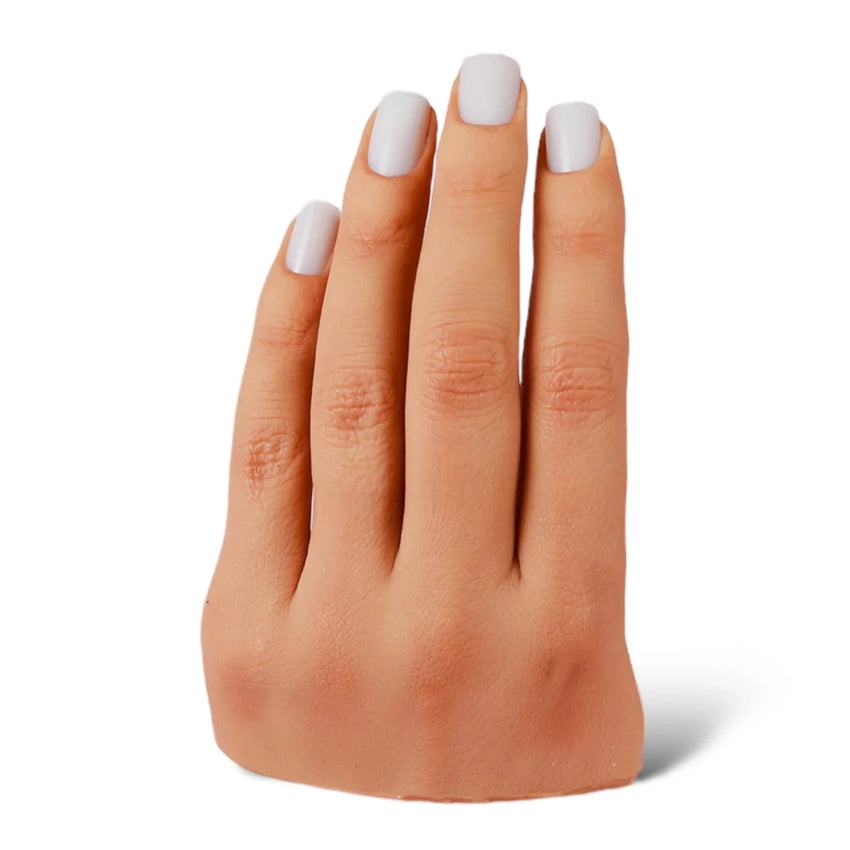
Red Iguana 3.0 Half Left Poseable Practice Hand — Nicole
Red Iguana 3.0 Half Left - Nicole
The most realistic and advanced training hand
Shop NowPriced at $137.00, the Half Left Nicole gives you a compact left-hand model in a fair skin tone. It costs less than the full-hand version and still offers poseable fingers and realistic cuticle pockets for hands-on practice. It gives you plenty of space to practice your product application, filing, and nail art.
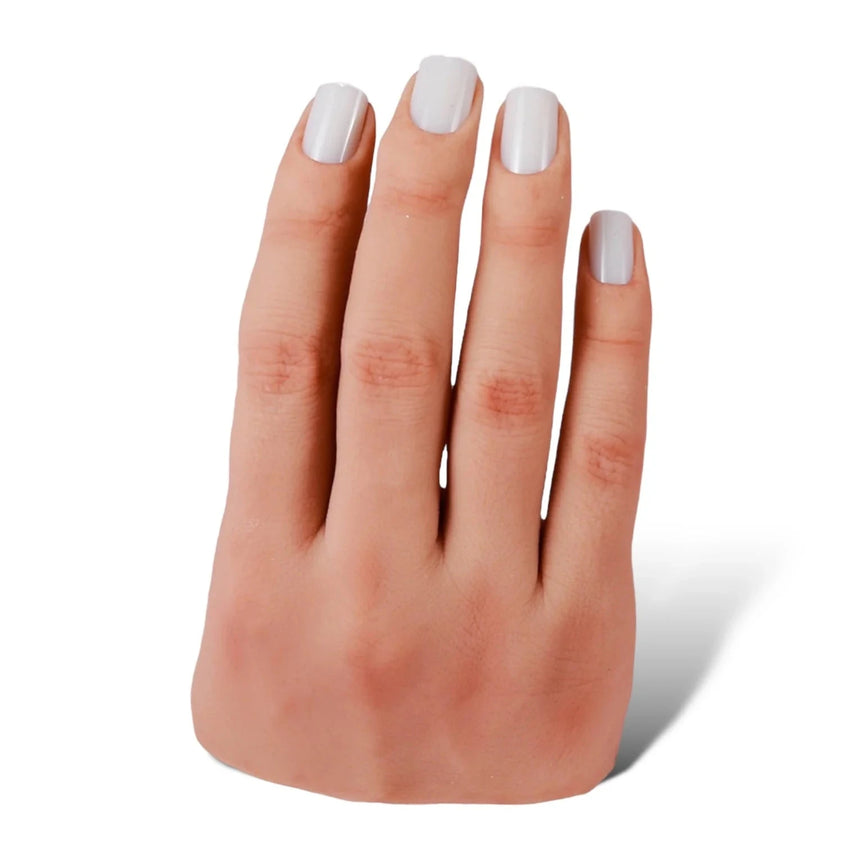
Red Iguana 3.0 Half Right Poseable Practice Hand — Liza
Red Iguana 3.0 Half Right - Liza
Compatible with the 2-in-1 Stand (cavity built in)
Shop NowThe Half Right Liza is also priced at $137.00 and shares the same premium feel and features as the rest of the 3.0 line. It's perfect if you favor right-side positioning for rehearsals and photography, or if you're looking for a match to an existing left hand.
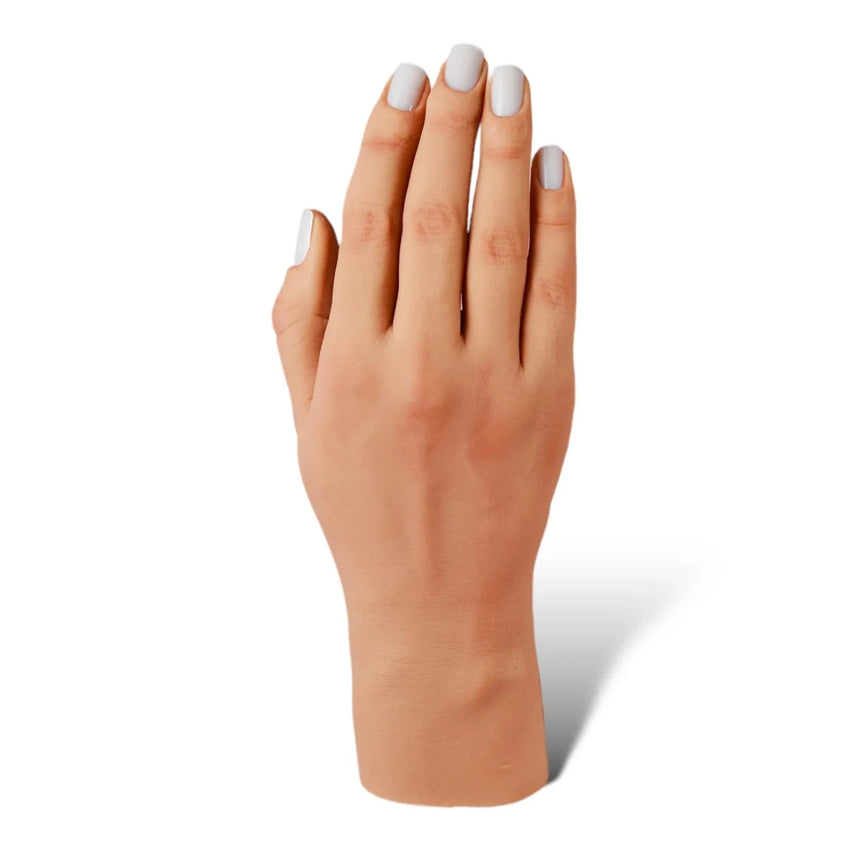
Red Iguana 3.0 Full Right Poseable Practice Hand — Nicole
Red Iguana 3.0 Full Right - Nicole
Tighter cuticle pockets for a secure nail fit
Shop NowAt $247.00, the Full Right Nicole is a complete five-finger hand, including the thumb. Having all five fingers allows you to rehearse a full manicure or extension service in sequence, exactly as you would on a real client. It is the best choice for salons, schools, and individual technicians who want to master full-set consistency rather than isolated repetitions.
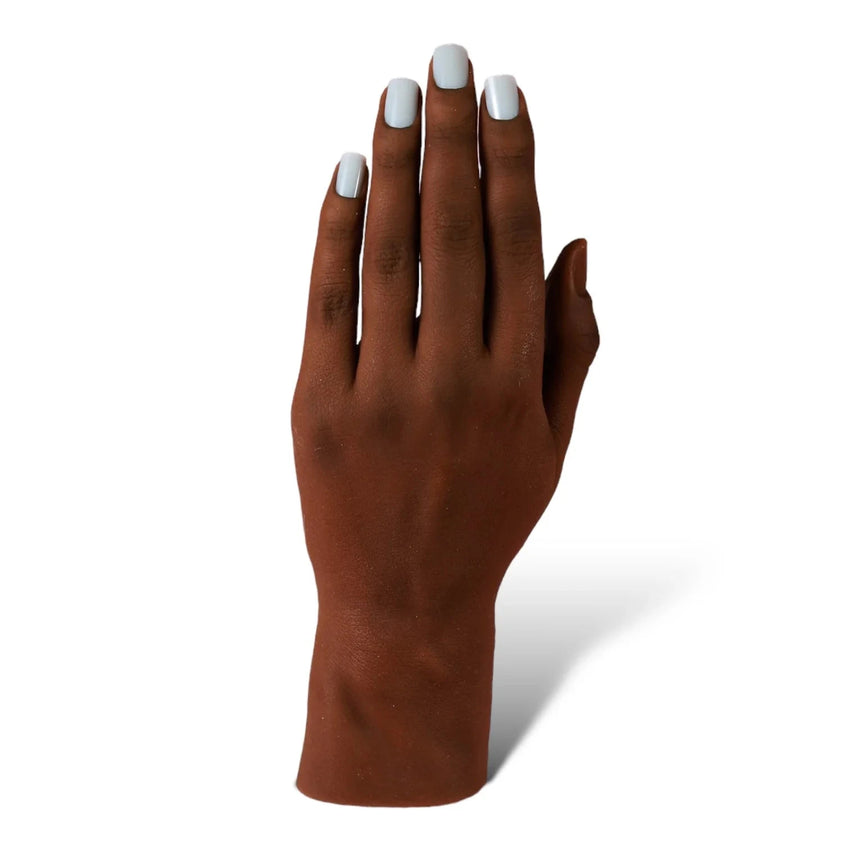
Red Iguana 3.0 Full Left Poseable Practice Hand — Evelyn
Red Iguana 3.0 Full Left - Evelyn
Comes with a new storage box and pink silk bag
Shop NowThe Full Left Evelyn is also priced at $247.00 and provides the same complete five-finger format in a left-hand orientation and dark skin tone. It features the same flexible internal metal armature for adjustable positioning, making it a perfect fit for a dedicated left-handed practice setup or as part of a matched left-and-right pair for portfolio photography.
FAQs
What Is a Nail Practice Hand Used For?
A practice hand is a fake hand made of silicone, rubber, or plastic used to rehearse manicures and nail enhancements. Some models, like silicone practice hands, offer a lifelike surface to perform filing or shaping, applying extensions, and doing nail art.
Do Beginners Really Need a Practice Hand?
Not every beginner needs one, but it helps when hand models are hard to find, or you need frequent repetition.
Is a Silicone or Rubber Practice Hand Better?
If you want something that feels like a real client, silicone is the best choice because it offers lifelike skin texture and flexibility. On the other hand, if you are working with a tighter budget, a rubber or plastic model is a perfectly fine option for practicing your basic application and nail art.
How Do You Attach Nail Tips to a Practice Hand?
Follow the system designed for your model. Tips may insert into cuticle pockets or attach through another replaceable system, with some silicone hands allowing primer and glue for extra stability.
How Do You Remove Nail Tips Without Damaging the Hand?
If you have a silicone nail practice hand, file the product down carefully to the base tip, keeping your tools away from the soft silicone. Never yank a glued tip off by force, or you will tear the material. For a plastic practice hand, just slide or snap the tip out of its mechanical slot.
Should I Buy a Full Hand or Half Hand?
Choose a full hand if you want to practice matching the length, shape, and design across all five fingers for a cohesive look. A half hand is a more compact, budget-friendly option if you only need a few nails to practice on.
How Long Does a Nail Practice Hand Last?
Nail practice hands don't have a set expiration date. It really depends on how you treat it. If you keep your e-file off the skin, clean it properly, and store it safely after each session, a good practice hand can easily last for years.
Can You Use a Practice Hand for Nail Art Photos and Content?
Yes, you can. Realistic practice hands are perfect for showing off your designs on social media, building a portfolio, or filming tutorials. Plus, if the fingers are poseable, you can bend them into the exact angles you need for the perfect shot.
How Do You Clean a Nail Practice Hand?
Always check the manufacturer's guide first. For silicone hands like Red Iguana, wash them with warm water and mild soap, and use a soft brush while you rinse to help remove stubborn glitter or chrome dust from the cracks.
Are Poseable Practice Hands Worth the Extra Cost?
Poseable practice hands are worth the investment if you want to bend the fingers into comfortable working angles or need natural positions for social media photos. But if you only need a surface for basic product application, a standard non-poseable model will work fine.
Conclusion
A nail practice hand gives you a low-pressure way to repeat techniques, correct mistakes, and build control and consistency before working on a paying customer.
Choosing the best one for you should be based on what you can comfortably spend, the skills you are still building, and whether features like poseable fingers would actually improve the way you practice. As your technique improves, keep working on real hands too, since clients bring different nail shapes, skin, movement, and positioning that a practice hand cannot fully recreate.
If a realistic silicone or poseable model fits your training needs, our Red Iguana collection is a good place to compare full hands, half hands, fingers, and thumbs and find the format that works for you.


