


You're standing in a blank retail unit, or maybe you're staring at a spreadsheet on your kitchen table, and the question is the same either way: where do I actually start?
Establishing a nail salon requires meticulous planning and legal compliance, but it also requires dozens of hands-on decisions about what to buy, how to arrange it, and which nail products to stake your reputation on. Those are two very different kinds of work, and most guides blur the lines between them.
This article separates them. We'll walk through every step of starting a nail salon, from choosing your business model to opening your doors.
Key Takeaways
- Decide early whether you're launching a home-based nail salon, renting a suite, or opening a full commercial salon.
- Handle the legal side first before you sign a lease or buy major equipment.
- Build a realistic budget by station, scaling quantities to your planned number of manicure stations.
- Choose a coherent nail system rather than random products.
- Put systems in place before opening day so you can focus on clients once the doors open.
Decide What Kind of Nail Salon You're Setting Up
This is the decision that shapes every other decision in the guide. Whether you're building a home-based nail salon in a spare room, renting a suite inside an existing beauty space, or signing a lease on a full commercial salon, the path forward looks completely different for each. Your budget, licensing complexity, layout, and growth potential all flow from this one choice.
Many salon owners start small, starting with a home studio or booth rental, then scale into commercial spaces once they have a stable client base and real data on service demand.
Home Studio vs. Suite Rental vs. Commercial Salon
- Home Studio: Startup costs for a home-based nail salon range from $2,000 to $10,000. Best for solo operators testing the market. Low overhead, minimal build-out, but limited capacity and potential zoning restrictions.
- Suite/Booth Rental: This is a step up. You rent a station within a larger salon or multi-suite facility. Expect rental fees between $150 and $400 per week, depending on location. Lower capital outlay than a full nail shop, but less control over branding and environment.
- Commercial Salon: Commercial nail salons typically require $40,000–$250,000 to open, depending on station count and build-out scope. More licensing, more management overhead, but the most room for growth, staffing, and creating a professional environment that supports higher-ticket nail services.
This choice determines space, licensing complexity, and budget for every section that follows.
How Many Stations Are You Planning For?
Think of each station (one manicure table, one chair, one lamp, one set of tools) as your core planning unit. Equipment, supply quantities, and square footage all scale with the number of stations.
A small commercial salon typically occupies 800–1,500 sq ft. Allocate 175-250 square feet per nail technician to ensure comfortable spacing. Common setups: 1 station (home or solo suite), 3–4 stations (small neighborhood salon), 5–8+ (mid-size or full-service). Later sections will reference "per station" quantities so you can translate advice directly into a shopping list.
Handle the Legal and Licensing Requirements
Legal structure, licensing, and insurance must be addressed before renovation or major purchases. Exact requirements vary by state and city, so treat this section as your checklist for verifying with local authorities.
Business Structure and Registration
Most small business owners choose between two structures:
- Sole Proprietorship: Simplest to set up, minimal paperwork, lowest formation cost. The downside: you have full personal liability, meaning your personal assets are exposed if something goes wrong.
- Limited Liability Company (LLC): Creates a separate legal entity that shields personal assets from business debts and lawsuits. Slightly more paperwork and state filing fees, but most nail salon owners prefer this protection.
Whichever you choose, register your business name, obtain an employer identification number (EIN) from the IRS if you plan to hire employees, and open a dedicated business bank account to separate personal finances from salon revenue. Clean records from day one make tax filing simpler and position you better for business loans down the road.
Licenses, Permits, and Insurance
Here's what you'll typically need:
- Nail Technician / Cosmetology License: Every person performing nail services must hold a valid license. A cosmetology license is often required for nail technicians, with training hour requirements ranging from 100 to 750 hours depending on the state. Nail technicians must hold valid state-issued Professional Manicurist Licenses.
- Salon Establishment License: Separate from individual licenses - this covers the facility itself and often requires an inspection before opening.
- Business License: Most states require a business license for nail salons.
- Health Department Permits: Nail salons must comply with health department regulations, including sanitation protocols, access to handwashing, and, in some jurisdictions, specific ventilation standards.
- Seller's permit: A seller's permit is needed to collect sales tax if you retail nail products.
- Business insurance: Liability insurance is recommended for nail salon owners. Consider general liability, professional liability, property coverage, and workers' compensation if you hire employees.
Ventilation is crucial due to toxic chemicals used in nail services - gel vapors, acrylic dust, and e-file particles all require proper air handling. Check your state cosmetology board before committing to a space - ventilation and plumbing retrofits can be expensive surprises.
Build Your Budget and Business Plan
Realistic Cost Ranges by Salon Size
Startup costs vary dramatically by format:
|
Salon Type |
Typical Startup Cost |
|
Home studio (1 station) |
$2,000–$10,000 |
|
Small commercial (4–6 stations) |
$40,000–$75,000 |
|
Full-scale salon/spa (8–15 stations) |
$75,000–$250,000+ |
Startup costs for a nail salon typically range from $25,000 to $150,000 for the middle of the market. Initial costs include leasing, equipment, supplies, and marketing. Most commercial spaces require a deposit equal to first and last month's rent, plus build-out expenses that can run $40–$100 per square foot, depending on finishes and infrastructure needs.
Always add a 20–30% contingency line for surprises like extra plumbing, inspection-driven changes, or delayed equipment deliveries.
What a Basic Business Plan Should Cover
A comprehensive business plan is essential for securing funding and keeping you on track. A business plan includes market analysis and financial projections, but it doesn't need to be 40 pages. Cover these essentials:
- Service Menu and Pricing Strategies - define which professional services you'll offer (basic manicure, gel polishes, acrylic nails, nail art, add-ons) and price tiers based on thorough market research
- Target Market - who your ideal client is, local demographics, and a market analysis of nearby competition in this competitive market
- Location Analysis - square footage, lease terms, utility capacity
- Detailed Budget - startup and monthly cost breakdown, including operating expenses like rent, payroll, utilities, supplies, and marketing efforts
- Break-Even Estimate - monthly fixed costs divided by average profit per service tells you how many appointments you need
Payroll typically accounts for over 50% of a salon's operating expenses, so factor staffing costs heavily. Nail salons can expect profit margins between 15% and 45% depending on service mix, pricing, and cash flow management.

(Image by Lunamarina on Canva)
Choose and Set Up Your Space
What to Look For in a Location
Finding the right location is about balancing visibility, accessibility, and cost:
- Foot Traffic and Visibility: High-traffic areas increase visibility but raise lease costs. Ensure your salon is visible from the street to attract more customers. Choose locations near residential or college neighborhoods for higher traffic.
- Parking and Access: Convenient parking matters - clients won't come back if parking is a hassle.
- Nearby Competition: Scope out other beauty salons and nail shops in the area. Decide whether you'll compete on price, quality, nail art specialization, or a luxury spa experience to build a competitive advantage.
- Utility Capacity: Confirm the space can accommodate plumbing for pedicure chairs, the electrical load for multiple UV/LED lamps and nail drills, and, if required, ventilation ducting. Commercial spaces usually require 3- to 5-year leases, so make sure infrastructure works before signing.

Layout Basics That Affect Workflow
Plan your floor layout before ordering furniture. Think of a rectangle: reception and retail near the entrance, manicure tables along one wall, pedicure chairs toward the back, and a dedicated sterilization zone near the washroom.
Key considerations:
- Station Spacing: A nail salon typically requires 175 to 250 square feet per technician - enough room for tech mobility, client comfort, and avoiding cross-contamination.
- Shared Color/Product Bar Vs. Per-Station Stock: A central color bar reduces duplication. Base and top coats should be stocked at each station, since every service uses them.
- Sterilization Area: Place it centrally so techs can access clean tools without crossing client zones.
- Dust Collection and Ventilation: This ties back to the licensing section - source-capture ventilation at each station or desktop dust collectors are required by many state boards.
Select the Right Nail Gels and Polishes for Your Service Menu
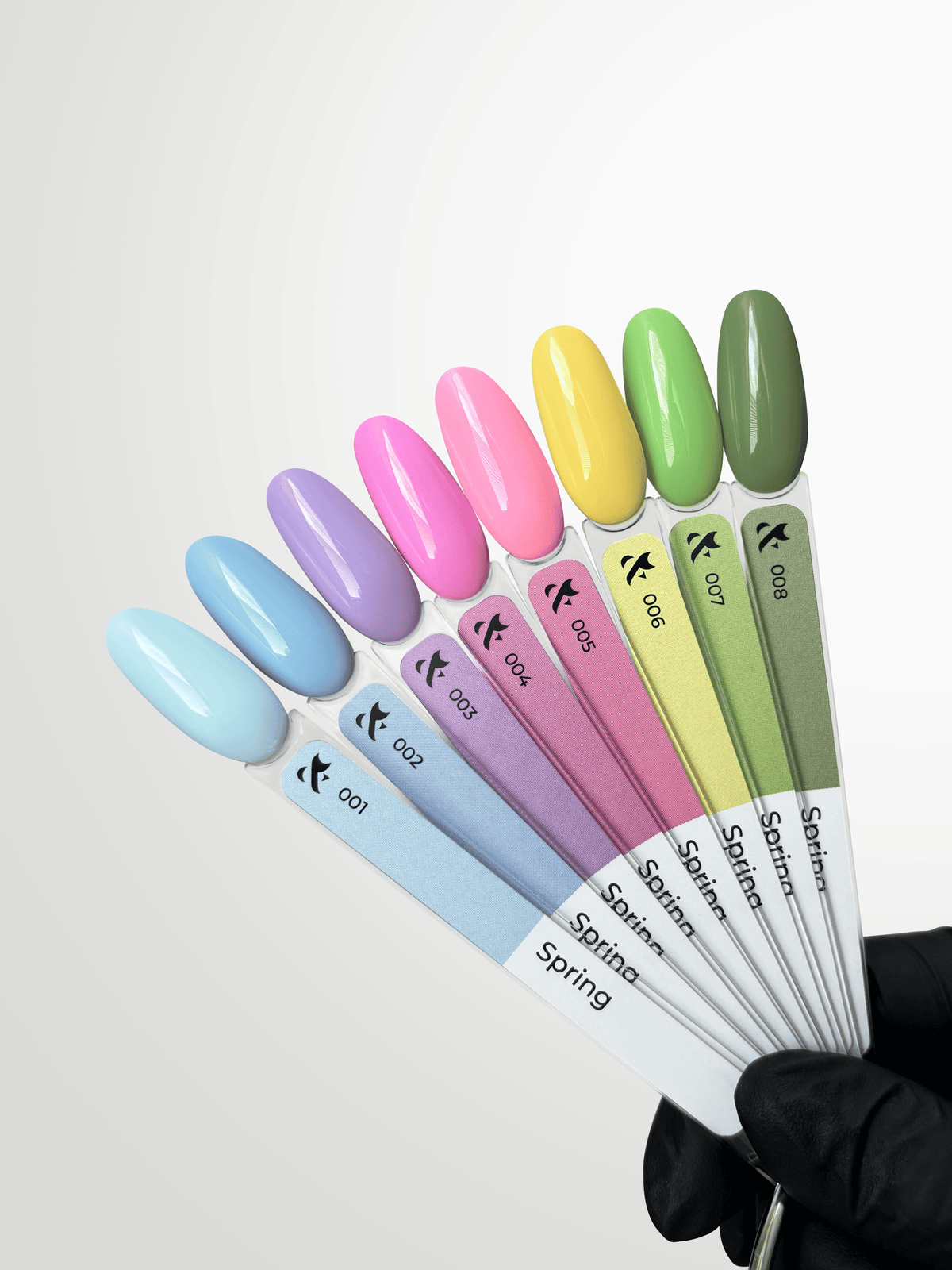
Product selection is one of the most consequential and most under-explained decisions in salon setup. What you stock determines which nail services you can offer, how you price them, and what your ongoing reorder costs look like. It also directly shapes the client experience - chip resistance, wear time, and finish quality all come down to product choice.
Gel Polish vs. Traditional Polish vs. Builder/Extension Systems
- Traditional Nail Polish: Air-dried lacquer. Cheapest cost of goods, no lamp needed, but chips within days. Best for quick polish changes or budget manicures.
- Gel Polishes: UV- or LED-cured. Typical wear time of 10–21+ days. Requires a curing lamp and soak-off removal. This is the core of most modern nail salon menus.
- Builder Gel / Extension Systems: Thicker, structural gels used to add length, strength, or overlays. Includes hard gel, builder gel, and BIAB (Builder In A Bottle) - a soak-off builder that's growing rapidly in popularity. Higher ticket price, more skill required.
- Acrylic Nails: Powder-and-liquid system. Durable and versatile for sculpting gels and acrygels, but requires strong ventilation and more dust management.
Each system has different cost, training, and sanitation implications. A salon specializing in nail art and extensions will stock very differently from one focused on express gel manicures.
The Core Application System (Prep, Base, Color, Top)
When most people think "polish budget," they picture color bottles. In reality, every gel manicure uses a multi-step system:
- Prep - sanitize, push back cuticles with a cuticle pusher, file with a nail file, buff the natural nail, then dehydrate with a nail prep solution such as the F.O.X Nano Dehydrator.
- Adhesion - apply a bonder or primer (like F.O.X Nail Prep and Ultrabond primer) to improve adhesion and dramatically reduce lifting
- Base Coat - protects the natural nail and provides the bond layer
- Color - one or two coats of gel polish, cured between layers
- Top Coat - seals the color and delivers the final finish (glossy or matte)
Your budget must account for all of these layers, not just color. Base and top coats get used on every single client, so you'll go through them far faster than any individual shade. Initial inventory should focus on core products and popular colors before branching into specialty items.
Full Palette vs. Starter Color Set
This is a genuine either/or decision:
- Starter Set (15–20 Shades): Covers the essentials - nudes, pinks, reds, a few darks, and a couple of seasonal accents. Lower upfront cost (roughly $400–$800 for gel polish), easier to manage, and the ability to expand based on actual client preferences.
- Full Palette (50–100+ Shades): Immediate variety, an impressive color wall, and a stronger first impression. But significantly higher inventory cost and more product sitting unused.
Color is typically shared across stations on a central bar, unlike base and top coats that need to be stocked more generously per chair.
Ready to build your shopping list? Check out F.O.X.'s Color Collections for curated shade ranges and the 3-Tech Team buying guide for exact quantities and brand-by-brand breakdowns.
Stock the Right Nail Tools and Equipment

Hand Tools (One Set Per Station)
Every station needs its own complete set of hand tools:
- Cuticle pushers (metal, stainless steel)
- Cuticle nippers
- Manicure scissors
- Nail drill bits
- Nail files in multiple grits (coarse through fine)
- Buffer blocks
- Nail brushes for dust removal
These should never be shared between techs during a shift - both for hygiene reasons and because technicians develop strong preferences for their own tools. Ideally, keep two full sets per nail tech so one set is always in sterilization while the other is in use. Essential supplies include gloves, disinfectants, and nail files, which are disposable or single-use items.
Invest in ergonomic seating for nail technicians' comfort - techs who spend 8 hours hunched over a table will burn out fast without proper support.
Power Equipment (Lamps, Drills, Dust Collectors)
- UV/LED Lamps: One per station, no exceptions. A nail salon needs a curing unit and nail table as absolute minimums. Curing happens constantly during gel services, and sharing lamps between stations kills efficiency.
- E-file Drills: One per station if extensions, builder gel, or heavy filing are core services. If your menu is mostly gel polish with light prep, a shared unit can work temporarily - but most growing salons end up buying per-station drills quickly.
- Dust Collectors: These are essential for health and air quality, not a convenience. Acrylic work, e-file prep, and gel removal all generate fine particulate dust. Desktop or under-table collectors protect both techs and clients, and many state boards now require them.
Sterilization and Sanitation
Every salon must adhere to strict sanitation standards for tools and services. Sanitation equipment is crucial for maintaining hygiene standards, and regulators often inspect logbooks and sterilization indicators.
- Autoclave or Dry Heat Sterilizer: Can be shared centrally rather than per station. Autoclave is the gold standard for metal tools.
- Ultrasonic Cleaner: A pre-clean step that removes debris before sterilization and extends the life of your sterilizer.
- Disposables: Nitrile gloves, lint-free wipes, sterilization pouches, hospital-grade disinfectant for surfaces, and Barbicide or equivalent for soaking implements.
Proper sanitation isn't just a regulatory box to check - it's what separates a trustworthy nail business from one that loses clients to health concerns.
Set Up Brow and Lash Tools and Products (If Offering These Services)
Many new salons add brow and lash services alongside nail art to increase revenue per client visit. If you're considering this expansion, here's what to stock:
- Tints and Dyes: Brow tints, lash tints, and developers
- Lifting and Lamination Kits: Lash lift kits, brow lamination kits, neutralizer solutions
- Pre- and Post-Treatment Products: Cleansers, primers, nourishing oils, soothing gels
- Tools: Fine tweezers (various tips), brow scissors, lash brushes and combs, microbrush applicators, mapping tools for symmetry
Stocking decisions here follow the same shared-vs-per-station logic as nail color: most brow and lash products are shared station stock stored in a central trolley or cabinet, not duplicated at every chair.
Before investing, check your state's licensing rules. Many states require separate licensure or endorsements for lash extensions or brow services - and patch-testing protocols for chemical treatments are common requirements. Factor training costs into your budget if your nail technicians need additional certification.
Hire and Train Your Team
Staffing Models
Your staffing approach directly affects your business model, profit margins, and culture:
- Solo: You're the business owner and the only tech. Full control, full revenue, but capped capacity.
- Employees (W-2): You hire employees, handle payroll, taxes, and benefits. More control over quality and scheduling, but higher administrative burden. Nail salon owners earn 92% of income from booth rentals or commissions in rental-heavy models, but employee models give you more pricing control.
- Booth Rental / Commission: Independent techs pay a rental fee or a commission. Lower risk for you, easier to scale, but less control over service quality and brand consistency.
- Hybrid: Some employees, some renters. Balances risk with flexibility.
What to Look for When Hiring Nail Techs
When evaluating candidates for your team:
- Valid cosmetology license or nail tech license in your state
- A hands-on portfolio, such as photos of recent work, especially in the services you offer (builder gel, nail art, extensions)
- Have candidates complete a standard gel manicure or design within a set time
- Fit with your service menu and pace. A tech who excels at intricate 90-minute nail art sets may not thrive in a high-volume express salon
Even licensed techs need onboarding training on your chosen product systems, sanitation SOPs, and brand standards. Schedule periodic training days to keep consistency across your team.

(Image by DragonImages on Canva)
Set Up Your Salon Systems and Launch
Booking, POS, and Scheduling Software
Salon operations require appointment booking and point-of-sale software for management - and setting this up before opening day is critical, not an afterthought. Good software handles online booking, automated reminders (which reduce no-shows significantly), deposit collection, inventory tracking, and payment processing.
Cloud-based systems accessible from a phone or tablet work well for small teams. Reports from these tools - most popular services, busiest days, average ticket size - will directly inform your staffing and marketing strategy going forward. Budget $50–$150 per month for quality salon software.
Pre-Opening Marketing
Start building visibility before you open the doors:
- Google Business Profile: Claim and optimize it so clients can find your hours, location, and photos. Creating a website is essential for nail salons - even a simple one-page site with your services and booking link.
- Social Media Platforms: Build a portfolio on Instagram and TikTok with behind-the-scenes build-out content, practice nail art photos, and your color collection. Social media is a key marketing tool for salons, and these social media channels let you build a client base before day one.
- Local Partnerships: Partner with local businesses - coffee shops, boutiques, gyms - for cross-promotion. Local advertising is crucial for attracting nearby clients.
- Grand Opening Offers: Offering promotions can attract new clients to salons. Plan a grand opening event with discounted first-visit pricing, referral cards, and a loyalty program. Word of mouth is highly effective in beauty marketing, and referral discounts can enhance client retention rates.
Effective marketing strategies for salons include social media and local SEO. If you later expand into selling nail products online, investing in specialized e-commerce SEO can extend your reach well beyond the local area.

Frequently Asked Questions
How Much Does It Cost to Set Up a Nail Salon?
Startup costs for a home-based nail salon range from $2,000 to $10,000. Opening a small commercial nail salon costs between $40,000 and $75,000. Full-scale nail salons can cost $75,000 to $250,000 to open. The biggest line items are lease and build-out, furniture and pedicure chairs, nail tools and equipment, gel and polish systems, business insurance, and initial marketing.
How Long Does It Take to Open a Nail Salon?
A compliant home studio can be ready in 1–3 months. A commercial nail salon opening typically takes 3–9 months depending on permit approval timelines (often 2–3 months alone), lease negotiation, build-out, inspections, and equipment delivery. Start paperwork and space scouting early - even while finalizing your solid business plan.
Do I Need a License to Open a Nail Salon?
Yes. Two tracks apply: each nail tech must hold a valid individual license from the state cosmetology board, and the salon itself must hold a facility establishment license. You'll also need a local business license, health department permits, and a seller's permit if retailing products. Check with your state board and city clerk before taking deposits.
What Is the Difference Between a Home Nail Studio and a Commercial Salon?
A home-based nail salon is one you run from a residential space with minimal build-out, lower overhead, and typically one station. A commercial salon occupies dedicated commercial spaces with multiple manicure stations, a reception area, and dedicated sterilization zones. The differences extend to licensing complexity, zoning rules, insurance requirements, maintenance fees, and revenue potential.
How Many Gel Polish Colors Does a New Salon Need?
Start with 15–20 carefully chosen shades covering popular nudes, pinks, reds, a few darks, and seasonal accents. Base, top, and prep products matter more than having 100 colors on day one. Colors can be shared across stations on a central bar, so a single bottle serves multiple techs. Expand your palette based on actual client requests as revenue grows.
What Equipment Does Every Nail Station Need?
At minimum: a manicure table, client chair, technician chair, UV/LED curing lamp, cuticle pushers, nippers, files and buffers, disinfectants, proper lighting, and a dust collector or ventilation solution. Access to hot and cold running water is required by most state boards.
Do I Need a Dust Collector for a Nail Salon?
In many states, yes - or it's strongly recommended. Stations offering acrylic nails, e-file work, or builder gel generate fine airborne particles. Dust collectors reduce exposure for both techs and clients, improve air quality, and help with regulatory compliance.
How Many Nail Techs Do I Need to Start a Nail Salon?
It depends on station count and projected client load. A 4-station salon might launch with 1–3 techs. If each nail tech can serve 6–8 clients per day, gauge your expected bookings against that capacity. Hiring a small, strong team is better than filling chairs with undertrained staff.
Can I Open a Nail Salon Without Experience as a Nail Tech?
Legally, you can own a salon without being a licensed technician in many states - but you must hire employees who hold valid licenses for all professional services. Non-tech business owners benefit from partnering with an experienced lead technician and taking basic sanitation training to make informed decisions and maintain high-quality service standards.
Conclusion
Setting up a nail salon is really two parallel tracks running at the same time: the legal and business side (entity formation, licensing, a solid business plan, and insurance) and the hands-on technical side (space layout, equipment, and product systems). Getting both right from day one is what separates a successful nail salon from one drowning in costly mistakes and rework.
Good customer service increases repeat visits by clients, and loyal clients can stay with a salon for years - but that loyalty starts with the fundamentals. High client retention leads to long-term business success, and it's built on reliable products, proper sanitation, and a well-run operation.
Our recommendation: start with the essentials per station - lamp, drill, dust collector, and a coherent prep-base-color-top system - before chasing a massive color wall or industry trends. Build your business performance on the basics, then expand.
If you're ready to turn this plan into an actual shopping list, explore F.O.X's gel polish collections for curated color options and the 3-Tech Team buying guide for exact quantities, costs, and brand-by-brand breakdowns. Every successful nail salon owner started exactly where you are now - with a plan and a decision to move forward.


